“Whether you learn to read at four or whether you learn to read at seven… from the age of eight nobody can tell.”
Our education system is favouring the skills AI can replicate and “letting go” of the ones it can’t – like creativity and innovation – according to neuroscience educator NATHAN WALLIS.
Wallis has spent nearly two decades teaching parents about children’s brain development – and has spent seven years working on his first full book on the topic, titled: What were you thinking: Everything parents need to know about their baby, child or teen’s developing brain to raise resilient, emotionally intelligent kids.
Why creativity matters so much for kids’ brains
Wallis believes our education system is becoming like the Chinese system a generation ago and needs an overhaul. He disagrees with the idea that the earlier children learn, the better, and is concerned we are sidelining the arts, singing, dance, and creativity.
“I think we’re letting go of creativity and innovation and just trying to get (kids) to do STEM subjects. But they’re all the things that AI can do.” STEM subjects include science, technology, engineering, and maths.
“AI can’t do creativity, innovation, invention. And yet we’re sacrificing those and just teaching them the skills that AI is going to take over anyway.
“I think we probably need a major overhaul in our education system and for parents to understand that we need to educate the right brain as well as the left brain if you want a genius.
“And that’s creativity and innovation and the kid being in charge of some of their learning and not just sitting at a desk and getting told and getting ready for the exam.
“I think really it’s dumbing our kids down and it’s producing a crisis of anxiety and depression.”
Parenting has changed – dramatically
Wallis believes while modern parents have more information about parenting than ever before, they face pressures previous generations never imagined.
“When I was a child, 80 percent of people lived in the same community as their extended family. Now 20 percent of people do.
“When I was a child, most people had an at-home mum. And most people had two nanas that were available. Now, mum’s at work and probably the nanas are at work as well.
Wallis says that when he was young, he didn’t have to stay in his backyard; he just had to be home by the time the streetlights came on.
“Now, if I was four, not only would I have to stay in that yard, but I’d probably share it with 60 other kids. It would be called an early childhood centre. There’s a rapid amount of change.”
He says screens intensify the challenges modern parents face, noting a famous Australian study that found reduced white matter in the frontal cortex of kids’ brains as a result of excessive screen usage.
Why the first thousand days matter so much
A central theme of Wallis’s work is the critical importance of early childhood.
“We tend to have a cultural belief that early childhood is all shitty nappies and blowing noses and that you’ll start learning when you’re in school and then the really important learning is at high school,” he says.
“Actually, the most important learning is early childhood. That’s really what is going to determine how resilient you are, how happy you are and to a large extent how intelligent you are. It’s not just early childhood, but specifically that first thousand days of life from conception until a thousand days after. People don’t realise just how powerful that is in shaping the rest of their life.”
For parents wanting to give their children the best start in life, Wallis says the answer isn’t expensive schooling.
“If I want to invest in my grandchildren having the best life possible to reduce their chances of anxiety and depression and stuff at 15. It’s not about sending them to a flash primary or secondary school. It’s actually more about ideally having a parent stay at home in the first year of life or at least having a primary carer in the first thousand days of life.
“Rather than going to an early childhood centre that has one person rostered on nappies, another on bottles, I might have home-based care where just one person is looking after my kid or go to a centre that’s got primary care – where primarily one person is looking after my kid.”
Learning things earlier, doesn’t make you smarter
Wallis challenges the belief that earlier academic learning leads to better outcomes, saying New Zealand tends to follow a cultural belief that the earlier you do something, the cleverer you are.
“None of the research really supports that,” he says. Wallis points to Scandinavian countries, which generally delay formal literacy teaching until age seven yet achieve stronger literacy and numeracy outcomes.
He says the children who are less likely to experience anxiety and depression as teenagers are the ones who are left in a free-play, child-led curriculum until the age of seven.
He encourages parents to understand that child development is not a race and that there are four different brains in our heads, and they come online sequentially.
“From (age) two to seven you’re primarily in your emotional brain and so the key words there would not be literacy and numeracy. Literacy is wonderful for the seven-year-old brain.
“What really matters under seven is how you feel as a learner,” he explains. “Whether you learn to read at four or whether you learn to read at seven, from the age of eight nobody can tell.”
He says that if you want to predict how well a child will do at age 32, it’s their learning ‘disposition’ that matters.
“You’re better off to have a five-year-old that can count to nine but thinks ‘I’m a good learner’, than you are to have a five-year-old who’s been in an adult-led curriculum, sat down at the mat, got ready for school, can count to 100, knows the alphabet, but when you say to them, ‘Mate, what are you like as a learner?’ They go, ‘Oh not quite good enough’”.
It’s never too late
For parents worried they’ve pushed their child too hard, too early, Wallis is reassuring.
“I would just start focusing on things like building their confidence. So as well as worrying about science, technology, engineering, and maths, get them into something they really love. If they really love dance, even though that might not be highly valued in the curriculum, get them into something that they can enjoy.”
This helps them learn to persist and do hard things in an environment they enjoy.
And take the pressure off yourself. Parents don’t have to get everything right.
“What I’d say to those parents is, according to the literature, you don’t have to be a great parent. You don’t even have to be a good parent. The literature literally uses the term ‘good enough parent’.
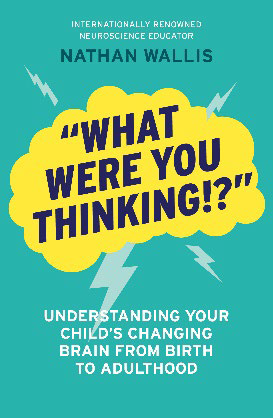
Released 30 June. Allen & Unwin Aotearoa NZ. NZRRP: $39.99.
Read more: The teen brain – what you need to know >>