How can we help our kids to become anti-racist in our own country, and more racially tolerant global citizens in later life? Dr LORRAINE McLEOD, editor of a new book about Pākehā confronting racism against Maōri, shares her knowledge with us.
McLeod, editor of Leave Your Big Boots at the Door, in which 17 Pākehā discuss their experiences of racism against Maōri in Aotearoa, says that to guide our young children not to be fearful or ignorant about people different from their own family, teachers and new parents need to thoroughly research and understand their own culture and family history first.
“Without this knowledge, understanding – even seeing – racism is difficult,” she says.
She uses the example of a Pākehā friend who believed she didn’t have a culture – and that only Maōri and people from other countries do.
“It hadn’t occurred to her that those of other cultures have very different experiences and habits because she knew very few people from other backgrounds. She was afraid (and a bit embarrassed) about her lack of knowledge of their ways. She had felt strongly that her own beliefs and attitudes were more advanced than theirs because her version was all she knew.”
McLeod says there are many ways we can prevent the normalisation of racist attitudes in our own children and grandchildren.
“In Aotearoa, we need to focus specifically on te ao Maōri and its interactions with te ao Pākehā due to our Te Tiriti agreement, but that focus also helps us with other cultures. It’s important that parents plan for, and participate spontaneously in, experiences and events in an atmosphere of positivity, curiosity, and enquiry, giving children opportunities to discuss, attend, enjoy and learn (about other cultures).”
Here are McLeod’s practical tips to get started:
- Use greetings from other cultures. For example, greeting children with ‘mōrena’ as they wake after a nap, ‘kia ora’ as they return from school, ‘bula vinaka’ when you pick them up from a friend’s house. Make a game of it.
- Talk about eating habits. Do we use chopsticks? Our fingers? Knives, forks and spoons? Give children experiences at home using methods of other cultures. If invited, attend meals with those of other cultures, and model for your children how to ask about, for example, using chopsticks.
- Play music of other cultures, and identify the origin (that’s Maōri, that’s Indian, that’s from the Philipines).
- Talk about different ways of celebrating events such as birthdays (not everyone celebrates them, and some cultures have special birthdays to celebrate, for example, a Nuiean boy’s haircutting ceremony).
- Discuss the symbolism of different venues for the events of different cultures, and the behaviour expected when attending. Take your children to an event such as on a marae; open days are sometimes held, as well as tangihana of people you know in the community. In most towns, various cultures also have event centres such as Malaeola in Mangere, the Sri Lankan NZ Society in Dunedin and the Filipino Fiesta in various locations. Research things like open days and attend if you can. Enjoy the atmosphere with your children.
- Always discourage put-downs, negative statements that are racially or ethnically based, and comparisons that disadvantage others. There is always a reason why people do what they do, believe what they believe, and act the way they do, including you and me!
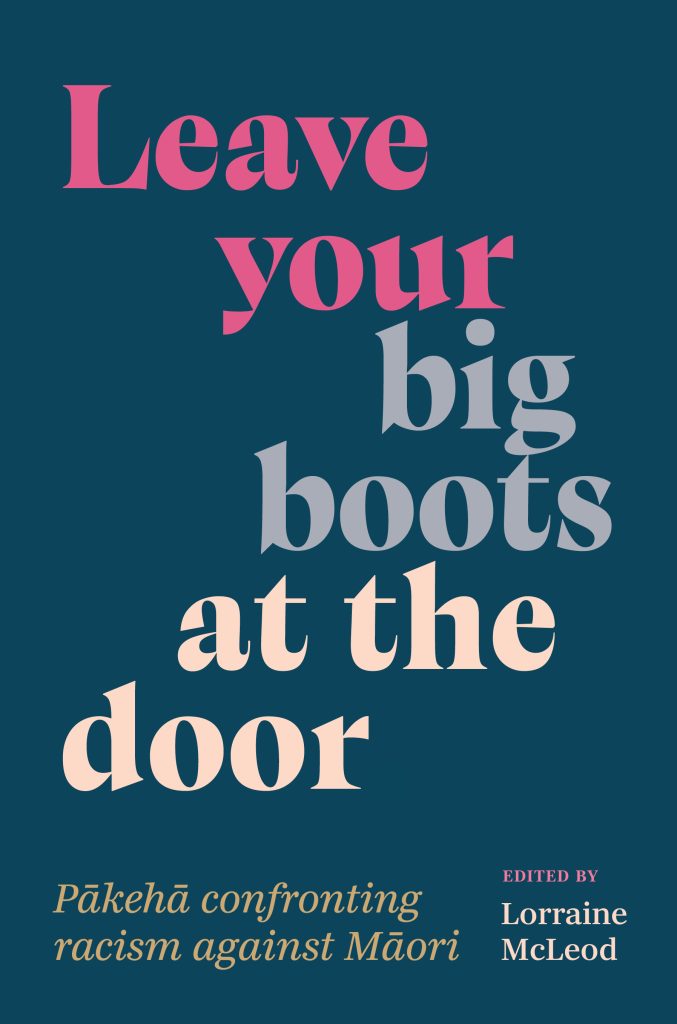
Leave Your Big Boots at the Door: Pākehā confronting racism against Māori, edited by Lorraine McLeod. Published by Potton & Burton; 23 October 2024; $39.99 RRP